A Behavioral Economics investigation

The Barbershop Test
Why two nearly identical businesses on the same street can have wildly different fates — and what behavioral science quietly knows about the invisible architecture of growth.
by andrew miller, co-founder of omada

14 min read


chapter I

observation
Two Barbershops on Maple Street
There is a barbershop on Maple Street that has been open for forty-one years. Three chairs. A signed photograph of the owner's grandfather above the cash register. A small bell over the door. On a Tuesday afternoon in March, you can walk in and be the only customer.
Three doors down, a different barbershop has a thirty-five-minute wait. Same haircut. Same price, give or take three dollars. The chairs are nicer, but only just. The barber is younger, but not significantly more skilled — when you ask, several customers mention having been to both shops over the years. They prefer the older barber, technically. But this is where they come now.
This is the Barbershop Test, and once you have seen it, you will see it everywhere.

You will see it in the two pizzerias one block apart, one with a forty-minute wait on a Wednesday night and the other with empty booths and a man in an apron staring out the window. You will see it in the two mortgage brokers, the two dentists, the two yoga studios, the two flower shops. You will see it in the two of nearly anything, because in nearly every category of American small business, there are two of nearly anything — and one of them is dying.
The standard explanations for why are wrong. They are wrong in a particular and important way: they are not lies, exactly. They are just not where the action is.
The losing shop is rarely the worse shop. The winning shop is rarely the better one. Something else is happening, something most owners cannot see because it is happening in a place they do not look — inside the heads of customers who do not yet know they are customers, in the seven seconds before a decision is made, in a quiet algorithmic competition the older barber on Maple Street has not been told he is participating in.
This is the story of that competition. It is not, as it turns out, a story about who is best. It is a story about who is seen.

chapter II
the math
The Quiet Math of Disappearance
If you start a small business in America today, the United States Bureau of Labor Statistics will, with the cool indifference of public data, predict your demise.
About one in five of you will be gone within a year. About half of you will be gone within five. By year ten, only roughly one in three will still be standing — though most owners, when surveyed in their first month, expect to be among the survivors. They are wrong at a rate of about two-to-one.
Here is what a hundred American small businesses look like, year by year, drawn the way the cemeteries actually fill:
The interesting question is not that they fail. The interesting question is what their owners thought they were doing wrong. Most surveyed afterward cite two reasons above all others: that there wasn't enough demand for what they offered, and that they ran out of money.
Both are correct, in the way that "I drowned because there was too much water" is correct. The deeper question is why a perfectly good barber, in a town that desperately needs more barbers, cannot find enough customers to keep the lights on while another, no better, has a wait. The water is not the problem. The current is.
~50%
U.S. small businesses gone within five years.
Source: U.S. Bureau of Labor Statistics, Business Employment Dynamics
42%
Owners who, post-mortem, blame "no market need" — in markets that demonstrably had need.
Source: CB Insights
76%
Local searchers who visit a business within 24 hours of finding it online.
Source: Google / Think with Google
That third number is the one to hold on to. It is quietly the most important number in this essay. It says: when a customer needs what you sell, they almost always act on it within a day. They do not deliberate. They do not weigh. They search, they choose, and they go.
The competition, in other words, is not about who is best. It is about who shows up in those few minutes between the question and the visit. And the way that competition is conducted has changed almost completely over the last decade — quietly, asymmetrically, and without anyone telling the older barber on Maple Street.

chapter III
the mind
The Nine-Second Decision
Watch yourself, sometime, choose a place to eat lunch in an unfamiliar city.
If you are like most people, you will pull out your phone, type something vague — tacos near me, good coffee — and stare at the resulting list for somewhere between four and eleven seconds before tapping. Researchers who have measured this with eye-tracking equipment and cooperative volunteers find that most local-business decisions are made in under ten. Often under five. Almost never, when there is a list of viable options, more than fifteen.
In those few seconds, the brain is doing something specific. It is not, as most of us imagine, weighing pros and cons. It is running a much older procedure, one cognitive scientists call fluency: it is asking, which of these options feels like the obvious one? Whichever option's name, photo, rating, and presence triggers the strongest sense of "yes, this" — that is the option that wins.
Below are two real-feeling restaurants in a city you have just arrived in. They serve more or less the same food at more or less the same price. You have nine seconds. Pick one.
It is 6:42 p.m. You are hungry. You search “ramen near me.” This is what you see.
Tonkotsu Saburo
★★★★★
4.8 (612 reviews)
Open · 0.4 mi
29 photos
Yamada Noodle
★★★★☆
4.6 (41 reviews)
Open · 0.3 mi
3 photos
Demonstration
Whichever you picked, you almost certainly did not pick it because the food is better. You cannot know that. You picked it because more strangers had agreed it was good, more photographs corroborated its existence, and that bundle of small signals translated, in your brain, into the feeling of obvious choice.
This is not a flaw in your reasoning. It is your reasoning. The brain, faced with too many options and too little time, does what brains do well: it follows social signals, defaults to the familiar, and treats the path of least cognitive resistance as a vote for quality. Behavioral economists call these moves heuristics. They have names — anchoring, social proof, availability, mere-exposure — and they are not biases in the pejorative sense. They are how decisions actually get made, every time, by everyone, including you.
A small business does not lose to its competitor. It loses to the brain's quiet, ancient preference for whatever feels most obviously real.
For Frank, the older barber on Maple Street, this is grim news of a particular kind. Frank is not losing because he is worse. Frank is losing because he has nine fewer reviews, four fewer photos, an unclaimed Google profile, and zero recent posts. To the brain doing a four-second scan, Frank does not appear less good. Frank appears less real.
The good news, and there is good news, is that the heuristics that quietly bury Frank can be learned and worked with. They are predictable. They are measurable. They are, increasingly, automatable. The shop down the street is not winning by accident. It is winning by behavioral architecture — whether or not anyone in the shop could name what they are doing.

chapter IV
The Geography
The Invisibility Economy
For most of the twentieth century, the most important thing a local business could own was a corner.
A corner — a literal one, with a window — was a passive customer-acquisition machine. Foot traffic walked by, eyes drifted up, a fraction of those eyes converted into walk-ins. Marketing was, more or less, signage. The Maple Street barbershop with the bell above the door was built for that economy. It worked beautifully for forty-one years.
Then it didn't.
Beginning in the early 2010s and accelerating sharply through the 2020s, the discovery of local businesses migrated almost entirely from the street to the screen. By 2024, roughly 46% of all Google searches carried local intent — somebody, somewhere, asking the internet to recommend a real-world place. Of those searches, the overwhelming majority resulted in a phone call, a direction request, or a website visit within the day.
The corner, in other words, did not disappear. It simply moved. The new corner is the first three results on a Google Maps query, the carousel above the fold, the Instagram tag for your neighborhood. It is still passive. It is still the highest-leverage asset a local business can own. But unlike a literal corner, it cannot be bought, leased, or inherited from a grandfather. It has to be earned, and re-earned, daily, in a competition most owners have not been told they are running.
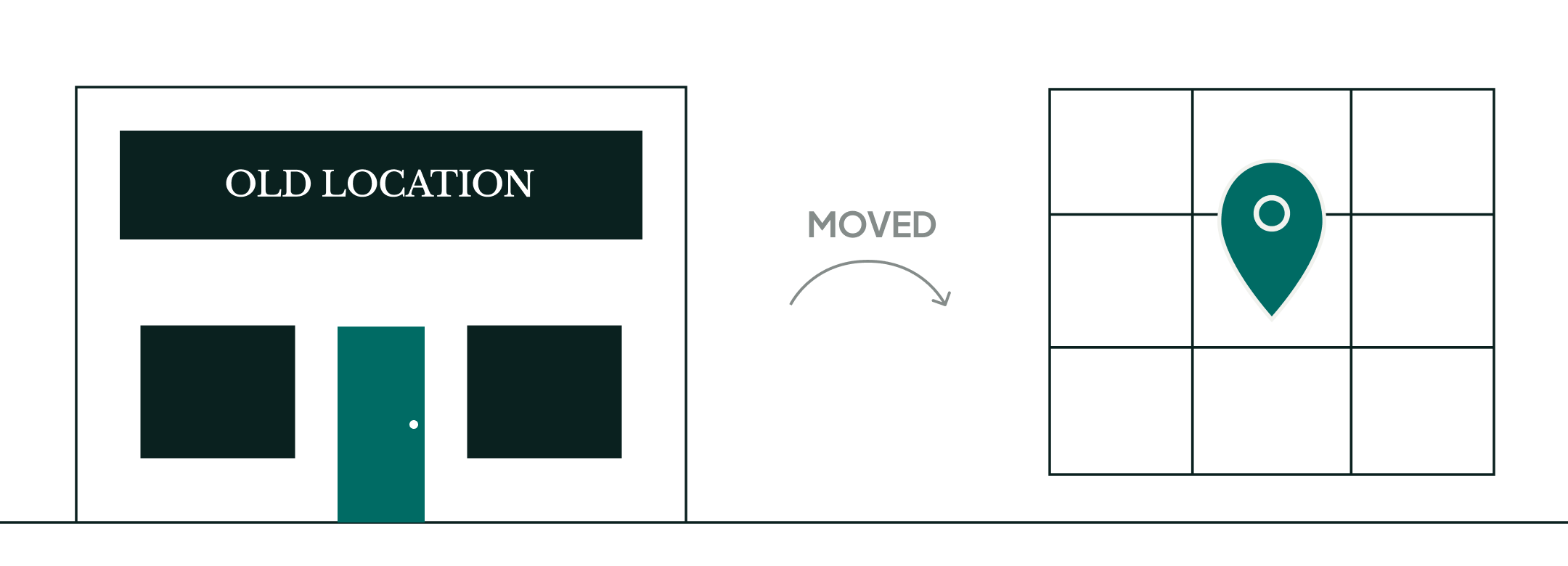
The new corner is not a place. It is a position. And like any position, it can be held — or it can be lost to whoever is paying attention.
Three categories of signal control whether a business holds the new corner. None of them are mysterious. All of them are, individually, easy. Together, in combination, daily, they are the work that quietly separates the winning barbershop from the losing one.

Presence
google profile
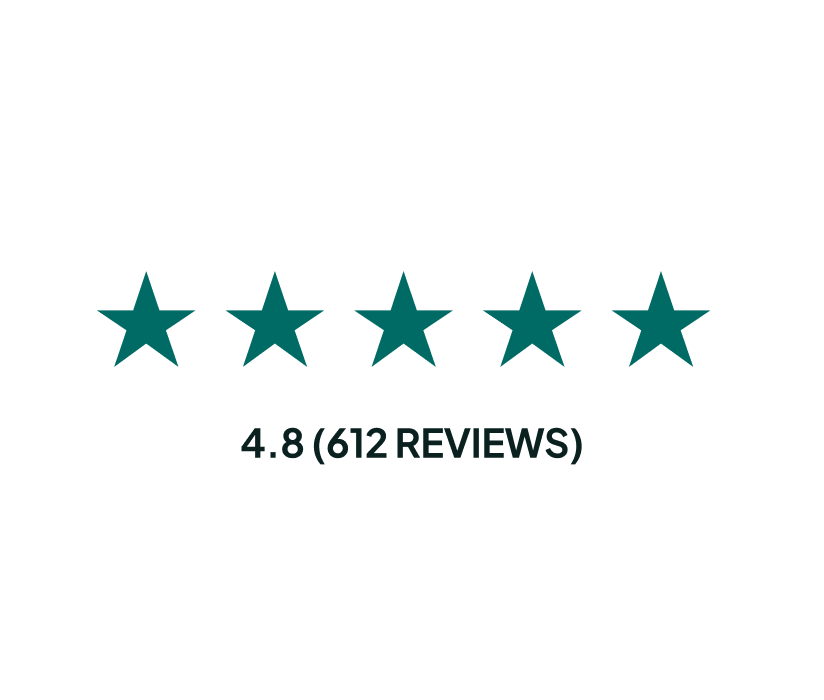
Proof
customer reviews
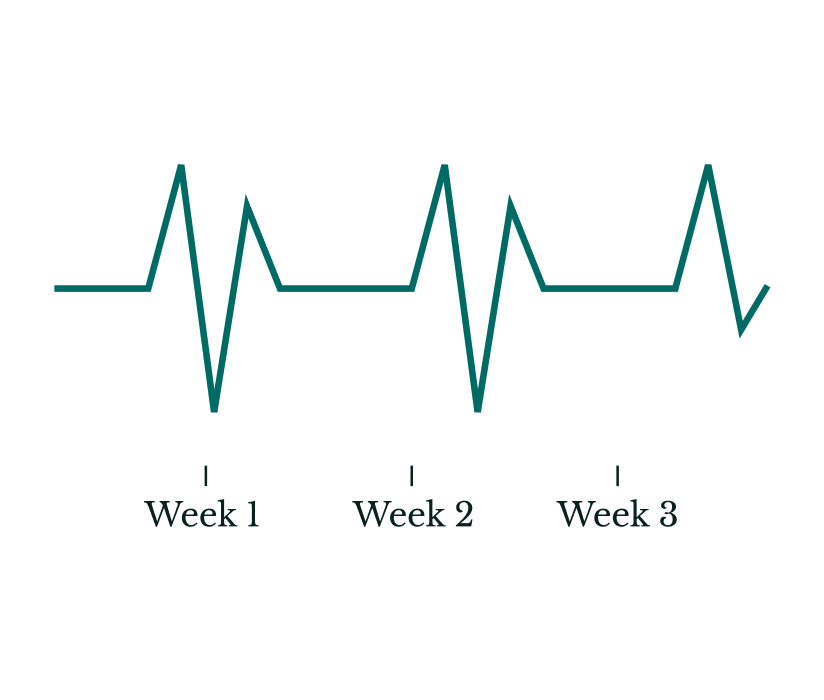
Pulse
regular content
The three signals of local visibility, in plain English:
① Presence — your Google Business Profile, fully filled, photographs current, hours accurate, posts fresh.
② Proof — reviews, in volume, recent, responded to.
③ Pulse — regular content, in your voice, on the platforms your customers idle on while waiting in other queues.
Each is mundane on its own. The compounding of the three is what wins corners.
There is nothing about this that requires being good at marketing. There is nothing about it that requires being good at technology. It requires only being consistent in three places at once, every week, indefinitely, while also running a business. Which is, of course, the problem.

chapter V
The trap
The Marketing-Industrial Complex
Here is the thing nobody tells small-business owners, and it is a thing the marketing industry has a structural reason not to tell them: the standard advice does not work.
"Run some Facebook ads." "Try Google Ads." "Boost your post." This advice is not malicious. It is the advice of an industry whose business model requires that you keep paying. Every dollar a small business spends on paid traffic buys exactly one dollar's worth of visibility. When the dollar runs out, so does the visibility. There is no equity. There is no compounding. There is no asset on the other side. There is only the meter, ticking.
The math gets brutal quickly. Move the slider:
Now compare this to the kind of work the winning barbershop is doing — without, mostly, knowing they are doing it. Every weekly Instagram post, every photo added to a Google Profile, every review responded to, every neighborhood hashtag joined: each is a small, permanent asset. None of them disappear when the spending stops, because there is no spending. The shop is, in the language behavioral economists would use, building cognitive availability — the ease with which it comes to mind when a customer types the next search.
Cognitive availability does not depreciate. Ad spend does. This is the entire game.
The marketing-industrial complex has, for understandable reasons, made the first kind of work extremely difficult to outsource and the second kind embarrassingly easy. So small businesses, sensibly responding to incentives, sign up for ad accounts they don't understand and try to find ten extra hours a week to post things they do not have the time, energy, or training to post. They mostly fail at both. And then, as the Bureau of Labor Statistics quietly notes, half of them are gone in five years.
There is a different way. It is, oddly, the older way.

chapter VI
Field Notes
A Pizza Shop, a Mortgage Broker, a Family Farm
If you spend long enough talking to local-business owners — and the people who write this kind of essay tend to — you start to notice something specific about the ones who are quietly winning.
It is not that they are unusually marketing-savvy. Most of them, when asked, profess a kind of bemused indifference toward the whole enterprise. They are pizza people, or mortgage people, or farm people. They got into this work because they liked making the pizza, or closing the loan, or growing the squash. The marketing, when they describe it, sounds almost incidental — something they have managed to make small and constant rather than large and intermittent.
Here are three of them, in their own descriptions:

SR
Steven Rosen
Elemental Pizza
Seattle, WA
“This does everything I know we should be doing.”
Steven runs a small pizzeria in Seattle. Like nearly every pizzeria owner, he knows there are things he should be doing — posting on Instagram, asking for reviews, keeping the Google profile fresh. He also has dough proofing and a line at the counter and a delivery driver who has not shown up. The gap between the things he should do and the things he has time to do is the gap most local businesses live and die in.
What changed for him was not motivation. It was offloading. "This does everything I know we should be doing," he says, "but don't have the time, energy, or know how to do."
BF
Braxton Futrell
Rockwell Mortgage
South Jordan, UT
The relationship business, in 2026.
Braxton is a mortgage broker. His job, when he describes it, is almost entirely about relationships — with clients, with realtors, with the long, ungainly paperwork of refinances and first-time buyers. The hours that go into all of that are not optional.
The hours that go into staying in front of the people who might one day need him, however, very much are. Mortgage brokers who lose, lose because they vanish from the conversation between transactions. The ones who win stay quietly visible, week after week, through the long stretches when no client is actively looking. That visibility is the entire job, and it is also the part nobody has time to do.
r
rachel
Ranch 25 Family Farms
South Jordan, UT
“Customers, friends, and family have all been asking who's behind it.”
Rachel runs a family farm. Her marketing, before, was the kind of thing every farmer knows — irregular Facebook posts, the occasional photo of a calf, long stretches of silence during haying season. The farm did fine. The farm did not grow.
What is interesting is what her customers said when the rhythm changed. Not oh, you are advertising more. Something subtler: who is behind this? The content felt, suddenly, like the farm itself — only it was reaching people who had never set foot on it. Which is, when you think about it, the entire point.
There is a pattern in these stories, and it is not a marketing pattern. It is a behavioral one. None of these owners became different people. None of them started "doing marketing" in the way the marketing-industrial complex usually means. They simply made the small, consistent work — the presence, proof, and pulse of Chapter IV — into something they did not have to remember to do.
Which raises the obvious question: how do you tell whether you, today, are running the kind of business the brain on the other side of the search bar can find?

chapter VII
Diagnostic
The Barbershop Test, Administered
What follows is the actual Barbershop Test — a seven-question diagnostic that estimates whether a real-world business would, today, be the winning shop or the losing one in the four-second scan we walked through in Chapter III.
It is not a perfect instrument. Nothing in this kind of work is. But it is calibrated against what we know about how local search and customer choice actually behave, and it will give you a defensible read on where your business stands in the new geography of attention. Allow about two minutes.

chapter VIII
The Architecture
What Compounding Looks Like
There is a graph that lives, more or less unspoken, behind this entire essay. It is the graph that explains, mathematically, why the winning barbershop wins.
It looks like this:
Visibility over time, paid vs. organic
36 months · stylized model · same monthly effort


VISIBILITY →
36 MONTHS →


the gap


Paid traffic — flat. Stops the day the spend stops.
Organic visibility — slow, then steep. Compounds forever.
For roughly the first six months of the graph, the paid line is winning. The owner doing organic work feels foolish. They are putting in real hours and the lights are barely flickering. The paid owner, meanwhile, has customers walking in. This is the part where most owners give up on the organic work and double down on the ads. It is, statistically, the worst possible time to make that decision.
Around month seven or eight, something quiet happens. The organic line, fed by accumulating reviews, photos, posts, profile updates, and the cognitive-availability arithmetic of mere-exposure, starts to bend upward. By month twelve it is matching the paid line. By month eighteen it has passed it. By month thirty-six it is several multiples ahead, while costing — to a first approximation — nothing per click, ever.
The shop that wins is not the shop that did the most marketing. It is the shop that did the smallest amount of marketing, every single week, for long enough.
This is a deeply unsexy answer. It is also, when you understand the underlying behavioral mechanics, the only one that holds up. The mere-exposure effect, first documented by Robert Zajonc in 1968, is one of the most replicated findings in psychology: humans prefer things they have seen before, simply because they have seen them before. Repeated, low-grade exposure to a brand does not just remind people you exist. It actively makes them like you more. The seventh post does not just reach a new customer. It makes the previous six retroactively more persuasive.
Compound interest, behavioral edition. The same math that turns a hundred dollars into a comfortable retirement turns a weekly Instagram post into a thirty-five-minute wait at a barbershop on Maple Street.
The catch, of course, is the same catch that buries every compounding strategy: it requires that you not stop. And nothing about running a small business — the dough, the loans, the squash, the children — makes "not stopping" easy.
Which is the point at which honest essays about behavioral science have to admit what they are quietly recommending. The work is not difficult to identify. The work is difficult to do, every week, while also doing all of the other work. The thing that needs to be invented is not a new theory of growth. The thing that needs to be invented is a way for an ordinary owner — Frank, Steven, Braxton, Rachel — to do the work without having to remember it.
CODA
The shop down the street isn't better.
It just shows up more.
This essay was written by Andrew Miller, co-founder of Omada — an AI marketing team (Alpha and eight specialists) that handles the presence, proof, and pulse of a local business automatically, every day. No ad spend. No agency. No twenty extra hours a week. The work that quietly separates the winning barbershop from the losing one, done while you run the rest of your business.
A one-week trial is free. The longer-form argument — a book on growth as a behavioral science, of which this is the opening field report — is in the works.
Try Omada Free
Visit Omada
ABOUT THE AUTHOR
Andrew Miller
Andrew Miller is co-founder & Head of Growth at Omada, an AI marketing platform for local businesses backed by HubSpot Ventures and Crosslink Capital. Master's in Behavioral Economics. Eighteen years in B2B SaaS, including roles at Xembly and Orbit (acq. Postman). Writes from Edinburgh, Scotland on growth as a behavioral science. This piece is adapted from a forthcoming book, The Barbershop Test.
Sources & Notes
U.S. Bureau of Labor Statistics — Business Employment Dynamics: SMB survival rates by year
CB Insights — "Top Reasons Startups Fail" (post-mortem analysis)
Google / Think with Google — Local search behavior; 76% same-day-visit data; 46% local intent
Zajonc, R. B. (1968) — "Attitudinal Effects of Mere Exposure," Journal of Personality and Social Psychology
Kahneman, D. (2011) — Thinking, Fast and Slow — System 1 / fluency mechanics
Cialdini, R. (1984, rev. 2021) — Influence — social proof and authority heuristics
Decision-time-on-search studies: Meeker / SOASTA / various eye-tracking aggregations, 2021–2024
Field interviews: Omada customer corpus, 2025–2026 (composite vignettes)
© Omada AI
A Behavioral Economics investigation

The Barbershop Test
Why two nearly identical businesses on the same street can have wildly different fates — and what behavioral science quietly knows about the invisible architecture of growth.
by andrew miller, co-founder of omada

14 min read

chapter I
observation
Two Barbershops on Maple Street
There is a barbershop on Maple Street that has been open for forty-one years. Three chairs. A signed photograph of the owner's grandfather above the cash register. A small bell over the door. On a Tuesday afternoon in March, you can walk in and be the only customer.
Three doors down, a different barbershop has a thirty-five-minute wait. Same haircut. Same price, give or take three dollars. The chairs are nicer, but only just. The barber is younger, but not significantly more skilled — when you ask, several customers mention having been to both shops over the years. They prefer the older barber, technically. But this is where they come now.
This is the Barbershop Test, and once you have seen it, you will see it everywhere.
You will see it in the two pizzerias one block apart, one with a forty-minute wait on a Wednesday night and the other with empty booths and a man in an apron staring out the window. You will see it in the two mortgage brokers, the two dentists, the two yoga studios, the two flower shops. You will see it in the two of nearly anything, because in nearly every category of American small business, there are two of nearly anything — and one of them is dying.
The standard explanations for why are wrong. They are wrong in a particular and important way: they are not lies, exactly. They are just not where the action is.
The losing shop is rarely the worse shop. The winning shop is rarely the better one. Something else is happening, something most owners cannot see because it is happening in a place they do not look — inside the heads of customers who do not yet know they are customers, in the seven seconds before a decision is made, in a quiet algorithmic competition the older barber on Maple Street has not been told he is participating in.
This is the story of that competition. It is not, as it turns out, a story about who is best. It is a story about who is seen.

chapter II
the math
The Quiet Math of Disappearance
If you start a small business in America today, the United States Bureau of Labor Statistics will, with the cool indifference of public data, predict your demise.
About one in five of you will be gone within a year. About half of you will be gone within five. By year ten, only roughly one in three will still be standing — though most owners, when surveyed in their first month, expect to be among the survivors. They are wrong at a rate of about two-to-one.
Here is what a hundred American small businesses look like, year by year, drawn the way the cemeteries actually fill:
The interesting question is not that they fail. The interesting question is what their owners thought they were doing wrong. Most surveyed afterward cite two reasons above all others: that there wasn't enough demand for what they offered, and that they ran out of money.
Both are correct, in the way that "I drowned because there was too much water" is correct. The deeper question is why a perfectly good barber, in a town that desperately needs more barbers, cannot find enough customers to keep the lights on while another, no better, has a wait. The water is not the problem. The current is.
~50%
U.S. small businesses gone within five years.
Source: U.S. Bureau of Labor Statistics, Business Employment Dynamics
42%
Owners who, post-mortem, blame "no market need" — in markets that demonstrably had need.
Source: CB Insights
76%
Local searchers who visit a business within 24 hours of finding it online.
Source: Google / Think with Google
That third number is the one to hold on to. It is quietly the most important number in this essay. It says: when a customer needs what you sell, they almost always act on it within a day. They do not deliberate. They do not weigh. They search, they choose, and they go.
The competition, in other words, is not about who is best. It is about who shows up in those few minutes between the question and the visit. And the way that competition is conducted has changed almost completely over the last decade — quietly, asymmetrically, and without anyone telling the older barber on Maple Street.

chapter III
the mind
The Nine-Second Decision
Watch yourself, sometime, choose a place to eat lunch in an unfamiliar city.
If you are like most people, you will pull out your phone, type something vague — tacos near me, good coffee — and stare at the resulting list for somewhere between four and eleven seconds before tapping. Researchers who have measured this with eye-tracking equipment and cooperative volunteers find that most local-business decisions are made in under ten. Often under five. Almost never, when there is a list of viable options, more than fifteen.
In those few seconds, the brain is doing something specific. It is not, as most of us imagine, weighing pros and cons. It is running a much older procedure, one cognitive scientists call fluency: it is asking, which of these options feels like the obvious one? Whichever option's name, photo, rating, and presence triggers the strongest sense of "yes, this" — that is the option that wins.
Below are two real-feeling restaurants in a city you have just arrived in. They serve more or less the same food at more or less the same price. You have nine seconds. Pick one.
It is 6:42 p.m. You are hungry. You search “ramen near me.” This is what you see.
Tonkotsu Saburo
★★★★★
4.8 (612 reviews)
Open · 0.4 mi
29 photos
Yamada Noodle
★★★★☆
4.6 (41 reviews)
Open · 0.3 mi
3 photos
Demonstration
Whichever you picked, you almost certainly did not pick it because the food is better. You cannot know that. You picked it because more strangers had agreed it was good, more photographs corroborated its existence, and that bundle of small signals translated, in your brain, into the feeling of obvious choice.
This is not a flaw in your reasoning. It is your reasoning. The brain, faced with too many options and too little time, does what brains do well: it follows social signals, defaults to the familiar, and treats the path of least cognitive resistance as a vote for quality. Behavioral economists call these moves heuristics. They have names — anchoring, social proof, availability, mere-exposure — and they are not biases in the pejorative sense. They are how decisions actually get made, every time, by everyone, including you.
A small business does not lose to its competitor. It loses to the brain's quiet, ancient preference for whatever feels most obviously real.
For Frank, the older barber on Maple Street, this is grim news of a particular kind. Frank is not losing because he is worse. Frank is losing because he has nine fewer reviews, four fewer photos, an unclaimed Google profile, and zero recent posts. To the brain doing a four-second scan, Frank does not appear less good. Frank appears less real.
The good news, and there is good news, is that the heuristics that quietly bury Frank can be learned and worked with. They are predictable. They are measurable. They are, increasingly, automatable. The shop down the street is not winning by accident. It is winning by behavioral architecture — whether or not anyone in the shop could name what they are doing.

chapter IV
The Geography
The Invisibility Economy
For most of the twentieth century, the most important thing a local business could own was a corner.
A corner — a literal one, with a window — was a passive customer-acquisition machine. Foot traffic walked by, eyes drifted up, a fraction of those eyes converted into walk-ins. Marketing was, more or less, signage. The Maple Street barbershop with the bell above the door was built for that economy. It worked beautifully for forty-one years.
Then it didn't.
Beginning in the early 2010s and accelerating sharply through the 2020s, the discovery of local businesses migrated almost entirely from the street to the screen. By 2024, roughly 46% of all Google searches carried local intent — somebody, somewhere, asking the internet to recommend a real-world place. Of those searches, the overwhelming majority resulted in a phone call, a direction request, or a website visit within the day.
The corner, in other words, did not disappear. It simply moved. The new corner is the first three results on a Google Maps query, the carousel above the fold, the Instagram tag for your neighborhood. It is still passive. It is still the highest-leverage asset a local business can own. But unlike a literal corner, it cannot be bought, leased, or inherited from a grandfather. It has to be earned, and re-earned, daily, in a competition most owners have not been told they are running.
The new corner is not a place. It is a position. And like any position, it can be held — or it can be lost to whoever is paying attention.
Three categories of signal control whether a business holds the new corner. None of them are mysterious. All of them are, individually, easy. Together, in combination, daily, they are the work that quietly separates the winning barbershop from the losing one.
Presence
google profile
Proof
customer reviews
Pulse
regular content
The three signals of local visibility, in plain English:
① Presence — your Google Business Profile, fully filled, photographs current, hours accurate, posts fresh.
② Proof — reviews, in volume, recent, responded to.
③ Pulse — regular content, in your voice, on the platforms your customers idle on while waiting in other queues.
Each is mundane on its own. The compounding of the three is what wins corners.
There is nothing about this that requires being good at marketing. There is nothing about it that requires being good at technology. It requires only being consistent in three places at once, every week, indefinitely, while also running a business. Which is, of course, the problem.

chapter V
The trap
The Marketing-Industrial Complex
Here is the thing nobody tells small-business owners, and it is a thing the marketing industry has a structural reason not to tell them: the standard advice does not work.
"Run some Facebook ads." "Try Google Ads." "Boost your post." This advice is not malicious. It is the advice of an industry whose business model requires that you keep paying. Every dollar a small business spends on paid traffic buys exactly one dollar's worth of visibility. When the dollar runs out, so does the visibility. There is no equity. There is no compounding. There is no asset on the other side. There is only the meter, ticking.
The math gets brutal quickly. Move the slider:
Now compare this to the kind of work the winning barbershop is doing — without, mostly, knowing they are doing it. Every weekly Instagram post, every photo added to a Google Profile, every review responded to, every neighborhood hashtag joined: each is a small, permanent asset. None of them disappear when the spending stops, because there is no spending. The shop is, in the language behavioral economists would use, building cognitive availability — the ease with which it comes to mind when a customer types the next search.
Cognitive availability does not depreciate. Ad spend does. This is the entire game.
The marketing-industrial complex has, for understandable reasons, made the first kind of work extremely difficult to outsource and the second kind embarrassingly easy. So small businesses, sensibly responding to incentives, sign up for ad accounts they don't understand and try to find ten extra hours a week to post things they do not have the time, energy, or training to post. They mostly fail at both. And then, as the Bureau of Labor Statistics quietly notes, half of them are gone in five years.
There is a different way. It is, oddly, the older way.

chapter VI
Field Notes
A Pizza Shop, a Mortgage Broker, a Family Farm
If you spend long enough talking to local-business owners — and the people who write this kind of essay tend to — you start to notice something specific about the ones who are quietly winning.
It is not that they are unusually marketing-savvy. Most of them, when asked, profess a kind of bemused indifference toward the whole enterprise. They are pizza people, or mortgage people, or farm people. They got into this work because they liked making the pizza, or closing the loan, or growing the squash. The marketing, when they describe it, sounds almost incidental — something they have managed to make small and constant rather than large and intermittent.
Here are three of them, in their own descriptions:

SR
Steven Rosen
Elemental Pizza
Seattle, WA

“This does everything I know we should be doing.”
Steven runs a small pizzeria in Seattle. Like nearly every pizzeria owner, he knows there are things he should be doing — posting on Instagram, asking for reviews, keeping the Google profile fresh. He also has dough proofing and a line at the counter and a delivery driver who has not shown up. The gap between the things he should do and the things he has time to do is the gap most local businesses live and die in.
What changed for him was not motivation. It was offloading. "This does everything I know we should be doing," he says, "but don't have the time, energy, or know how to do."
BF
Braxton Futrell
Rockwell Mortgage
South Jordan, UT

The relationship business, in 2026.
Braxton is a mortgage broker. His job, when he describes it, is almost entirely about relationships — with clients, with realtors, with the long, ungainly paperwork of refinances and first-time buyers. The hours that go into all of that are not optional.
The hours that go into staying in front of the people who might one day need him, however, very much are. Mortgage brokers who lose, lose because they vanish from the conversation between transactions. The ones who win stay quietly visible, week after week, through the long stretches when no client is actively looking. That visibility is the entire job, and it is also the part nobody has time to do.
r
rachel
Ranch 25 Family Farms
South Jordan, UT
“Customers, friends, and family have all been asking who's behind it.”
Rachel runs a family farm. Her marketing, before, was the kind of thing every farmer knows — irregular Facebook posts, the occasional photo of a calf, long stretches of silence during haying season. The farm did fine. The farm did not grow.
What is interesting is what her customers said when the rhythm changed. Not oh, you are advertising more. Something subtler: who is behind this? The content felt, suddenly, like the farm itself — only it was reaching people who had never set foot on it. Which is, when you think about it, the entire point.
There is a pattern in these stories, and it is not a marketing pattern. It is a behavioral one. None of these owners became different people. None of them started "doing marketing" in the way the marketing-industrial complex usually means. They simply made the small, consistent work — the presence, proof, and pulse of Chapter IV — into something they did not have to remember to do.
Which raises the obvious question: how do you tell whether you, today, are running the kind of business the brain on the other side of the search bar can find?

chapter VII
Diagnostic
The Barbershop Test, Administered
What follows is the actual Barbershop Test — a seven-question diagnostic that estimates whether a real-world business would, today, be the winning shop or the losing one in the four-second scan we walked through in Chapter III.
It is not a perfect instrument. Nothing in this kind of work is. But it is calibrated against what we know about how local search and customer choice actually behave, and it will give you a defensible read on where your business stands in the new geography of attention. Allow about two minutes.

chapter VIII
The Architecture
What Compounding Looks Like
There is a graph that lives, more or less unspoken, behind this entire essay. It is the graph that explains, mathematically, why the winning barbershop wins.
It looks like this:
Visibility over time, paid vs. organic
36 months · stylized model · same monthly effort


VISIBILITY →
36 MONTHS →


the gap
Paid traffic — flat. Stops the day the spend stops.
Organic visibility — slow, then steep. Compounds forever.
For roughly the first six months of the graph, the paid line is winning. The owner doing organic work feels foolish. They are putting in real hours and the lights are barely flickering. The paid owner, meanwhile, has customers walking in. This is the part where most owners give up on the organic work and double down on the ads. It is, statistically, the worst possible time to make that decision.
Around month seven or eight, something quiet happens. The organic line, fed by accumulating reviews, photos, posts, profile updates, and the cognitive-availability arithmetic of mere-exposure, starts to bend upward. By month twelve it is matching the paid line. By month eighteen it has passed it. By month thirty-six it is several multiples ahead, while costing — to a first approximation — nothing per click, ever.
The shop that wins is not the shop that did the most marketing. It is the shop that did the smallest amount of marketing, every single week, for long enough.
This is a deeply unsexy answer. It is also, when you understand the underlying behavioral mechanics, the only one that holds up. The mere-exposure effect, first documented by Robert Zajonc in 1968, is one of the most replicated findings in psychology: humans prefer things they have seen before, simply because they have seen them before. Repeated, low-grade exposure to a brand does not just remind people you exist. It actively makes them like you more. The seventh post does not just reach a new customer. It makes the previous six retroactively more persuasive.
Compound interest, behavioral edition. The same math that turns a hundred dollars into a comfortable retirement turns a weekly Instagram post into a thirty-five-minute wait at a barbershop on Maple Street.
The catch, of course, is the same catch that buries every compounding strategy: it requires that you not stop. And nothing about running a small business — the dough, the loans, the squash, the children — makes "not stopping" easy.
Which is the point at which honest essays about behavioral science have to admit what they are quietly recommending. The work is not difficult to identify. The work is difficult to do, every week, while also doing all of the other work. The thing that needs to be invented is not a new theory of growth. The thing that needs to be invented is a way for an ordinary owner — Frank, Steven, Braxton, Rachel — to do the work without having to remember it.
CODA
The shop down the street isn't better.
It just shows up more.
This essay was written by Andrew Miller, co-founder of Omada — an AI marketing team (Alpha and eight specialists) that handles the presence, proof, and pulse of a local business automatically, every day. No ad spend. No agency. No twenty extra hours a week. The work that quietly separates the winning barbershop from the losing one, done while you run the rest of your business.
A one-week trial is free. The longer-form argument — a book on growth as a behavioral science, of which this is the opening field report — is in the works.
Try Omada Free
Visit Omada
ABOUT THE AUTHOR
Andrew Miller
Andrew Miller is co-founder & Head of Growth at Omada, an AI marketing platform for local businesses backed by HubSpot Ventures and Crosslink Capital. Master's in Behavioral Economics. Eighteen years in B2B SaaS, including roles at Xembly and Orbit (acq. Postman). Writes from Edinburgh, Scotland on growth as a behavioral science. This piece is adapted from a forthcoming book, The Barbershop Test.
Sources & Notes
U.S. Bureau of Labor Statistics — Business Employment Dynamics: SMB survival rates by year
CB Insights — "Top Reasons Startups Fail" (post-mortem analysis)
Google / Think with Google — Local search behavior; 76% same-day-visit data; 46% local intent
Zajonc, R. B. (1968) — "Attitudinal Effects of Mere Exposure," Journal of Personality and Social Psychology
Kahneman, D. (2011) — Thinking, Fast and Slow — System 1 / fluency mechanics
Cialdini, R. (1984, rev. 2021) — Influence — social proof and authority heuristics
Decision-time-on-search studies: Meeker / SOASTA / various eye-tracking aggregations, 2021–2024
Field interviews: Omada customer corpus, 2025–2026 (composite vignettes)
© Omada AI
A Behavioral Economics investigation
The Barbershop Test
Why two nearly identical businesses on the same street can have wildly different fates — and what behavioral science quietly knows about the invisible architecture of growth.
by andrew miller, co-founder of omada
14 min read

chapter I
observation
Two Barbershops on Maple Street
There is a barbershop on Maple Street that has been open for forty-one years. Three chairs. A signed photograph of the owner's grandfather above the cash register. A small bell over the door. On a Tuesday afternoon in March, you can walk in and be the only customer.
Three doors down, a different barbershop has a thirty-five-minute wait. Same haircut. Same price, give or take three dollars. The chairs are nicer, but only just. The barber is younger, but not significantly more skilled — when you ask, several customers mention having been to both shops over the years. They prefer the older barber, technically. But this is where they come now.
This is the Barbershop Test, and once you have seen it, you will see it everywhere.
You will see it in the two pizzerias one block apart, one with a forty-minute wait on a Wednesday night and the other with empty booths and a man in an apron staring out the window. You will see it in the two mortgage brokers, the two dentists, the two yoga studios, the two flower shops. You will see it in the two of nearly anything, because in nearly every category of American small business, there are two of nearly anything — and one of them is dying.
The standard explanations for why are wrong. They are wrong in a particular and important way: they are not lies, exactly. They are just not where the action is.
The losing shop is rarely the worse shop. The winning shop is rarely the better one. Something else is happening, something most owners cannot see because it is happening in a place they do not look — inside the heads of customers who do not yet know they are customers, in the seven seconds before a decision is made, in a quiet algorithmic competition the older barber on Maple Street has not been told he is participating in.
This is the story of that competition. It is not, as it turns out, a story about who is best. It is a story about who is seen.

chapter II
the math
The Quiet Math of Disappearance
If you start a small business in America today, the United States Bureau of Labor Statistics will, with the cool indifference of public data, predict your demise.
About one in five of you will be gone within a year. About half of you will be gone within five. By year ten, only roughly one in three will still be standing — though most owners, when surveyed in their first month, expect to be among the survivors. They are wrong at a rate of about two-to-one.
Here is what a hundred American small businesses look like, year by year, drawn the way the cemeteries actually fill:
The interesting question is not that they fail. The interesting question is what their owners thought they were doing wrong. Most surveyed afterward cite two reasons above all others: that there wasn't enough demand for what they offered, and that they ran out of money.
Both are correct, in the way that "I drowned because there was too much water" is correct. The deeper question is why a perfectly good barber, in a town that desperately needs more barbers, cannot find enough customers to keep the lights on while another, no better, has a wait. The water is not the problem. The current is.
~50%
U.S. small businesses gone within five years.
Source: U.S. Bureau of Labor Statistics, Business Employment Dynamics
42%
Owners who, post-mortem, blame "no market need" — in markets that demonstrably had need.
Source: CB Insights
76%
Local searchers who visit a business within 24 hours of finding it online.
Source: Google / Think with Google
That third number is the one to hold on to. It is quietly the most important number in this essay. It says: when a customer needs what you sell, they almost always act on it within a day. They do not deliberate. They do not weigh. They search, they choose, and they go.
The competition, in other words, is not about who is best. It is about who shows up in those few minutes between the question and the visit. And the way that competition is conducted has changed almost completely over the last decade — quietly, asymmetrically, and without anyone telling the older barber on Maple Street.

chapter III
the mind
The Nine-Second Decision
Watch yourself, sometime, choose a place to eat lunch in an unfamiliar city.
If you are like most people, you will pull out your phone, type something vague — tacos near me, good coffee — and stare at the resulting list for somewhere between four and eleven seconds before tapping. Researchers who have measured this with eye-tracking equipment and cooperative volunteers find that most local-business decisions are made in under ten. Often under five. Almost never, when there is a list of viable options, more than fifteen.
In those few seconds, the brain is doing something specific. It is not, as most of us imagine, weighing pros and cons. It is running a much older procedure, one cognitive scientists call fluency: it is asking, which of these options feels like the obvious one? Whichever option's name, photo, rating, and presence triggers the strongest sense of "yes, this" — that is the option that wins.
Below are two real-feeling restaurants in a city you have just arrived in. They serve more or less the same food at more or less the same price. You have nine seconds. Pick one.
It is 6:42 p.m. You are hungry. You search “ramen near me.” This is what you see.
Tonkotsu Saburo
★★★★★
4.8 (612 reviews)
Open · 0.4 mi
29 photos
Yamada Noodle
★★★★☆
4.6 (41 reviews)
Open · 0.3 mi
3 photos
Demonstration
Whichever you picked, you almost certainly did not pick it because the food is better. You cannot know that. You picked it because more strangers had agreed it was good, more photographs corroborated its existence, and that bundle of small signals translated, in your brain, into the feeling of obvious choice.
This is not a flaw in your reasoning. It is your reasoning. The brain, faced with too many options and too little time, does what brains do well: it follows social signals, defaults to the familiar, and treats the path of least cognitive resistance as a vote for quality. Behavioral economists call these moves heuristics. They have names — anchoring, social proof, availability, mere-exposure — and they are not biases in the pejorative sense. They are how decisions actually get made, every time, by everyone, including you.
A small business does not lose to its competitor. It loses to the brain's quiet, ancient preference for whatever feels most obviously real.
For Frank, the older barber on Maple Street, this is grim news of a particular kind. Frank is not losing because he is worse. Frank is losing because he has nine fewer reviews, four fewer photos, an unclaimed Google profile, and zero recent posts. To the brain doing a four-second scan, Frank does not appear less good. Frank appears less real.
The good news, and there is good news, is that the heuristics that quietly bury Frank can be learned and worked with. They are predictable. They are measurable. They are, increasingly, automatable. The shop down the street is not winning by accident. It is winning by behavioral architecture — whether or not anyone in the shop could name what they are doing.

chapter IV
The Geography
The Invisibility Economy
For most of the twentieth century, the most important thing a local business could own was a corner.
A corner — a literal one, with a window — was a passive customer-acquisition machine. Foot traffic walked by, eyes drifted up, a fraction of those eyes converted into walk-ins. Marketing was, more or less, signage. The Maple Street barbershop with the bell above the door was built for that economy. It worked beautifully for forty-one years.
Then it didn't.
Beginning in the early 2010s and accelerating sharply through the 2020s, the discovery of local businesses migrated almost entirely from the street to the screen. By 2024, roughly 46% of all Google searches carried local intent — somebody, somewhere, asking the internet to recommend a real-world place. Of those searches, the overwhelming majority resulted in a phone call, a direction request, or a website visit within the day.
The corner, in other words, did not disappear. It simply moved. The new corner is the first three results on a Google Maps query, the carousel above the fold, the Instagram tag for your neighborhood. It is still passive. It is still the highest-leverage asset a local business can own. But unlike a literal corner, it cannot be bought, leased, or inherited from a grandfather. It has to be earned, and re-earned, daily, in a competition most owners have not been told they are running.
The new corner is not a place. It is a position. And like any position, it can be held — or it can be lost to whoever is paying attention.
Three categories of signal control whether a business holds the new corner. None of them are mysterious. All of them are, individually, easy. Together, in combination, daily, they are the work that quietly separates the winning barbershop from the losing one.
Presence
google profile
Proof
customer reviews
Pulse
regular content
The three signals of local visibility, in plain English:
① Presence — your Google Business Profile, fully filled, photographs current, hours accurate, posts fresh.
② Proof — reviews, in volume, recent, responded to.
③ Pulse — regular content, in your voice, on the platforms your customers idle on while waiting in other queues.
Each is mundane on its own. The compounding of the three is what wins corners.
There is nothing about this that requires being good at marketing. There is nothing about it that requires being good at technology. It requires only being consistent in three places at once, every week, indefinitely, while also running a business. Which is, of course, the problem.

chapter V
The trap
The Marketing-Industrial Complex
Here is the thing nobody tells small-business owners, and it is a thing the marketing industry has a structural reason not to tell them: the standard advice does not work.
"Run some Facebook ads." "Try Google Ads." "Boost your post." This advice is not malicious. It is the advice of an industry whose business model requires that you keep paying. Every dollar a small business spends on paid traffic buys exactly one dollar's worth of visibility. When the dollar runs out, so does the visibility. There is no equity. There is no compounding. There is no asset on the other side. There is only the meter, ticking.
The math gets brutal quickly. Move the slider:
Now compare this to the kind of work the winning barbershop is doing — without, mostly, knowing they are doing it. Every weekly Instagram post, every photo added to a Google Profile, every review responded to, every neighborhood hashtag joined: each is a small, permanent asset. None of them disappear when the spending stops, because there is no spending. The shop is, in the language behavioral economists would use, building cognitive availability — the ease with which it comes to mind when a customer types the next search.
Cognitive availability does not depreciate. Ad spend does. This is the entire game.
The marketing-industrial complex has, for understandable reasons, made the first kind of work extremely difficult to outsource and the second kind embarrassingly easy. So small businesses, sensibly responding to incentives, sign up for ad accounts they don't understand and try to find ten extra hours a week to post things they do not have the time, energy, or training to post. They mostly fail at both. And then, as the Bureau of Labor Statistics quietly notes, half of them are gone in five years.
There is a different way. It is, oddly, the older way.

chapter VI
Field Notes
A Pizza Shop, a Mortgage Broker, a Family Farm
If you spend long enough talking to local-business owners — and the people who write this kind of essay tend to — you start to notice something specific about the ones who are quietly winning.
It is not that they are unusually marketing-savvy. Most of them, when asked, profess a kind of bemused indifference toward the whole enterprise. They are pizza people, or mortgage people, or farm people. They got into this work because they liked making the pizza, or closing the loan, or growing the squash. The marketing, when they describe it, sounds almost incidental — something they have managed to make small and constant rather than large and intermittent.
Here are three of them, in their own descriptions:

SR
Steven Rosen
Elemental Pizza
Seattle, WA

“This does everything I know we should be doing.”
Steven runs a small pizzeria in Seattle. Like nearly every pizzeria owner, he knows there are things he should be doing — posting on Instagram, asking for reviews, keeping the Google profile fresh. He also has dough proofing and a line at the counter and a delivery driver who has not shown up. The gap between the things he should do and the things he has time to do is the gap most local businesses live and die in.
What changed for him was not motivation. It was offloading. "This does everything I know we should be doing," he says, "but don't have the time, energy, or know how to do."
BF
Braxton Futrell
Rockwell Mortgage
South Jordan, UT

The relationship business, in 2026.
Braxton is a mortgage broker. His job, when he describes it, is almost entirely about relationships — with clients, with realtors, with the long, ungainly paperwork of refinances and first-time buyers. The hours that go into all of that are not optional.
The hours that go into staying in front of the people who might one day need him, however, very much are. Mortgage brokers who lose, lose because they vanish from the conversation between transactions. The ones who win stay quietly visible, week after week, through the long stretches when no client is actively looking. That visibility is the entire job, and it is also the part nobody has time to do.
r
rachel
Ranch 25 Family Farms
Portage, UT

“Customers, friends, and family have all been asking who's behind it.”
Rachel runs a family farm. Her marketing, before, was the kind of thing every farmer knows — irregular Facebook posts, the occasional photo of a calf, long stretches of silence during haying season. The farm did fine. The farm did not grow.
What is interesting is what her customers said when the rhythm changed. Not oh, you are advertising more. Something subtler: who is behind this? The content felt, suddenly, like the farm itself — only it was reaching people who had never set foot on it. Which is, when you think about it, the entire point.
There is a pattern in these stories, and it is not a marketing pattern. It is a behavioral one. None of these owners became different people. None of them started "doing marketing" in the way the marketing-industrial complex usually means. They simply made the small, consistent work — the presence, proof, and pulse of Chapter IV — into something they did not have to remember to do.
Which raises the obvious question: how do you tell whether you, today, are running the kind of business the brain on the other side of the search bar can find?

chapter VII
Diagnostic
The Barbershop Test, Administered
What follows is the actual Barbershop Test — a seven-question diagnostic that estimates whether a real-world business would, today, be the winning shop or the losing one in the four-second scan we walked through in Chapter III.
It is not a perfect instrument. Nothing in this kind of work is. But it is calibrated against what we know about how local search and customer choice actually behave, and it will give you a defensible read on where your business stands in the new geography of attention. Allow about two minutes.

chapter VIII
The Architecture
What Compounding Looks Like
There is a graph that lives, more or less unspoken, behind this entire essay. It is the graph that explains, mathematically, why the winning barbershop wins.
It looks like this:
Visibility over time, paid vs. organic
36 months · stylized model · same monthly effort


VISIBILITY →
36 MONTHS →


the gap
Paid traffic — flat. Stops the day the spend stops.
Organic visibility — slow, then steep. Compounds forever.
For roughly the first six months of the graph, the paid line is winning. The owner doing organic work feels foolish. They are putting in real hours and the lights are barely flickering. The paid owner, meanwhile, has customers walking in. This is the part where most owners give up on the organic work and double down on the ads. It is, statistically, the worst possible time to make that decision.
Around month seven or eight, something quiet happens. The organic line, fed by accumulating reviews, photos, posts, profile updates, and the cognitive-availability arithmetic of mere-exposure, starts to bend upward. By month twelve it is matching the paid line. By month eighteen it has passed it. By month thirty-six it is several multiples ahead, while costing — to a first approximation — nothing per click, ever.
The shop that wins is not the shop that did the most marketing. It is the shop that did the smallest amount of marketing, every single week, for long enough.
This is a deeply unsexy answer. It is also, when you understand the underlying behavioral mechanics, the only one that holds up. The mere-exposure effect, first documented by Robert Zajonc in 1968, is one of the most replicated findings in psychology: humans prefer things they have seen before, simply because they have seen them before. Repeated, low-grade exposure to a brand does not just remind people you exist. It actively makes them like you more. The seventh post does not just reach a new customer. It makes the previous six retroactively more persuasive.
Compound interest, behavioral edition. The same math that turns a hundred dollars into a comfortable retirement turns a weekly Instagram post into a thirty-five-minute wait at a barbershop on Maple Street.
The catch, of course, is the same catch that buries every compounding strategy: it requires that you not stop. And nothing about running a small business — the dough, the loans, the squash, the children — makes "not stopping" easy.
Which is the point at which honest essays about behavioral science have to admit what they are quietly recommending. The work is not difficult to identify. The work is difficult to do, every week, while also doing all of the other work. The thing that needs to be invented is not a new theory of growth. The thing that needs to be invented is a way for an ordinary owner — Frank, Steven, Braxton, Rachel — to do the work without having to remember it.
CODA
The shop down the street isn't better.
It just shows up more.
This essay was written by Andrew Miller, co-founder of Omada — an AI marketing team (Alpha and eight specialists) that handles the presence, proof, and pulse of a local business automatically, every day. No ad spend. No agency. No twenty extra hours a week. The work that quietly separates the winning barbershop from the losing one, done while you run the rest of your business.
A one-week trial is free. The longer-form argument — a book on growth as a behavioral science, of which this is the opening field report — is in the works.
Try Omada Free
Visit Omada
ABOUT THE AUTHOR
Andrew Miller
Andrew Miller is co-founder & Head of Growth at Omada, an AI marketing platform for local businesses backed by HubSpot Ventures and Crosslink Capital. Master's in Behavioral Economics. Eighteen years in B2B SaaS, including roles at Xembly and Orbit (acq. Postman). Writes from Edinburgh, Scotland on growth as a behavioral science. This piece is adapted from a forthcoming book, The Barbershop Test.
Sources & Notes
U.S. Bureau of Labor Statistics — Business Employment Dynamics: SMB survival rates by year
CB Insights — "Top Reasons Startups Fail" (post-mortem analysis)
Google / Think with Google — Local search behavior; 76% same-day-visit data; 46% local intent
Zajonc, R. B. (1968) — "Attitudinal Effects of Mere Exposure," Journal of Personality and Social Psychology
Kahneman, D. (2011) — Thinking, Fast and Slow — System 1 / fluency mechanics
Cialdini, R. (1984, rev. 2021) — Influence — social proof and authority heuristics
Decision-time-on-search studies: Meeker / SOASTA / various eye-tracking aggregations, 2021–2024
Field interviews: Omada customer corpus, 2025–2026 (composite vignettes)
© Omada AI